
UK Warehousing Services - The Definitive Guide to Outsourcing, Storage, Fulfilment & Distribution
This guide covers everything ecommerce brands need to know about UK 3PL warehouse services, including how they work, who they’re best suited for, and when outsourcing fulfilment makes sense.
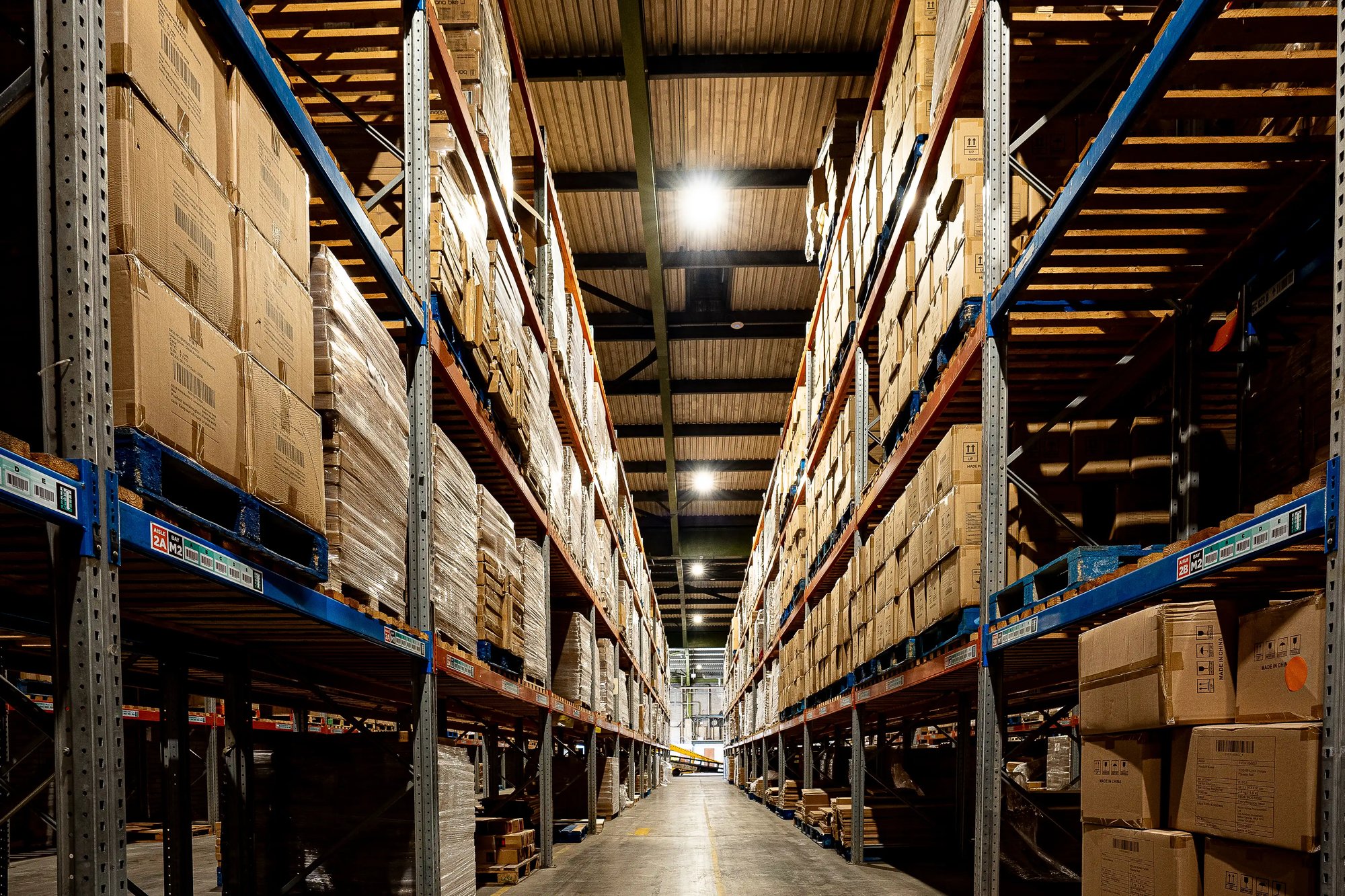
Table of Contents
- What Are 3PL Warehouse Services?
- 3PLs Vs In-house Fulfilment
- Why 3PL Services Matter For Growing Brands.
- What Services Can 3PL Warehouse Providers Offer?
- What Industries Can benefit From Outsourced Fulfilment?
- When Should You Consider Outsourcing To a 3PL Partner?
- How To Decide Which 3PL Partner Is Best For Your Brand.
- 3PL Fulfilment - Frequently Asked Questions (FAQs)
- Final Thoughts.
What Are 3PL Warehouse Services?
As ecommerce and retail brands scale, logistics quickly becomes more complex than simply storing stock and shipping orders. This is where 3PL warehouse services come in.
What Does ‘Third-Party Logistics’ (3PL) Mean?
Third-party logistics (3PL) is the outsourcing of a business’s logistics and supply chain operations to a specialist provider. A 3PL company manages key fulfilment functions such as warehousing, inventory management, order picking and packing, shipping, returns handling, and distribution, allowing businesses to focus on growth, sales, and customer experience.
Unlike in-house fulfilment, where brands run logistics internally, a 3PL provides the infrastructure, systems, and expertise needed to handle growing order volumes efficiently.
What Is a 3PL Warehouse?
A 3PL warehouse is a professionally operated facility that stores inventory and fulfils customer orders for multiple brands.
In the UK supply chain, a 3PL warehouse typically handles:
- Goods-in and storage
- Inventory management
- Pick, pack, and dispatch
- Returns and reverse logistics
- Distribution through UK carrier networks
Rather than acting as a standalone storage unit, a 3PL warehouse functions as a central hub that connects inventory, technology, carriers, and customers.
3PLs Vs In-House Fulfilment
Choosing between in-house fulfilment and a 3PL warehouse model isn’t about right or wrong, it generally comes down to a matter of timing.
Most ecommerce brands begin with in-house fulfilment because it’s accessible and cost-effective at low order volumes. Packing orders yourself, storing stock in a small unit, or running fulfilment from your own premises offers control and simplicity in the early stages.
However, as a business grows, fulfilment demands tend to increase faster than revenue. Order volumes rise, delivery expectations tighten, inventory management becomes more complex, and operational risk increases. At this point, what once felt manageable can start consuming time, space, and budget.
A 3PL warehouse is designed to absorb that complexity. Instead of building infrastructure internally, brands plug into established systems, trained warehouse teams, carrier networks, and scalable storage, for a fraction of the cost.
Which Fulfilment Model Works Best For Your Brand?
| Fulfilment Model: | Best For: | Positives: | Limitations: |
| In-House Fulfilment | Early-stage ecommerce brands with low, predictable order volumes. | Full internal control, low initial costs, simple setup for low order volumes. | Limited scalability, high fixed costs over time, operational risk increases with volume. |
| 3PL Fulfilment | Scaling ecommerce brands with growing or fluctuating demand. | Scalable infrastructure, professional warehouse teams, flexible capacity. | Less hands-on control requires onboarding and integration. |
Why 3PL Services Matter For Growing UK Brands
As order volumes increase, logistics complexity grows faster than revenue. More SKUs, more sales channels, higher customer expectations, and tighter delivery windows all place pressure on fulfilment operations.
For scaling ecommerce and retail brands, fulfilment stops being a background task and becomes a strategic function - occasionally creating dangerous bottlenecks in your operations, if not managed effectively.
A reliable 3PL enables brands to:
- Scale order volumes without adding internal headcount
- Meet UK next-day and time-specific delivery expectations
- Maintain accuracy during promotions and peak periods
- Expand into new sales channels without operational strain
UK consumers expect fast, reliable delivery as standard. Competing with established brands means logistics performance must match marketing and product quality.
UK-based warehousing also provides advantages around:
- Faster domestic delivery times
- Lower shipping costs compared to overseas fulfilment
- Strong carrier networks and contingency planning
Rather than limiting growth, a 3PL provides flexibility, resilience, and operational headroom.
What Services Can 3Pl Warehouse Providers Offer?
When ecommerce brands think about outsourcing fulfilment, it’s often framed as a simple handover of packing and shipping. In reality, modern 3PL partners in the UK cover far more than just getting orders out of the door.
Understanding the full scope of services a 3PL warehouse provider offers is essential — not just to compare providers accurately, but to identify where fulfilment inefficiencies may already be limiting your growth.
Warehousing and Storage
3PL warehouses are a hub for long-term inventory storage within secure, large-scale UK facilities. These facilities generally include temperature-controlled environments and flexible space allocation as inventory levels change – meaning there’s the perfect solution available for any sector, at any scale.
Picking, Packing and Order Fulfilment
One of the main advantages of a 3PL partnership is the access to accurate order processing, picking, packing, and dispatch. Designed to maintain speed and accuracy even during high-volume periods, a dedicated team of warehouse professionals will make sure that your customers receive exactly what they ordered, as soon as possible.
Ecommerce Fulfilment Services
To help your ecommerce journey, 3PL partners will offer direct integrations with ecommerce platforms and marketplaces in order to support multichannel fulfilment across B2C and B2B orders. A reputable 3PLshould integrate with core marketplaces including Shopify, Amazon, eBay, and more
Inventory Management and Stock Control
The digital tech available to large-scale UK 3PLs means that you can access real-time inventory reports, SKU management, and forecasting support as standard. These processes are crucial to help reduce stockouts, over-ordering, and the manual errors that can wreak havoc on your fulfilment.
Returns Management (Reverse Logistics)
Returns are an annoying, but necessary, hurdle for all ecommerce owners to manage. Efficient processing of returns, helping to protect margins and customer experience, should be managed as standard by your 3PL provider. This process includes inspection, restocking, and responsible disposal where required.
Distribution and Shipping
UK distribution and shipping can be a minefield. Luckily, your 3PL partner will have plenty of connections to both local and international courier services, who can get your inventory from the warehouse to your customers in one safe and efficient trip. These carriers should be optimised for last-mile delivery performance and cost control – keeping your customers, and your margins, happy.
What Industries Can Benefit from Outsourced Fulfilment?
Outsourced fulfilment isn’t reserved for one type of business, but it isn’t one-size-fits-all either. While the core principles of 3PL warehouse services in the UK remain consistent, the way those services are applied varies significantly by industry, product type, and customer expectation.
This is where an experienced UK 3PL adds the most value. By tailoring storage, pick-and-pack processes, inventory management, and distribution strategies to specific industry requirements, outsourced fulfilment becomes a growth enabler rather than a generic service.
How Can a 3PL Benefit Your Specific Industry?
| Industry | Common Fulfilment Challenge | 3PL Solution |
| Food & Drink | Products with short shelf lives, and strict food hygiene standards to adhere to. | FIFO stock management and strict batch and expiry tracking, keeping your stock and customers safe and fresh. |
| Pet Supplies | Bulky or heavy products, often being shipped as bundles, or through subscription services. | Optimised storage for oversized items, along with subscription fulfilment workflows. |
| Fashion & Apparel | High return rates, and incredibly complex SKU management. | Streamlined reverse logistics, and easy-access SKU-level inventory visibility. |
| Toys & Games | Extremely seasonal demand, likely spiking in Q4. | Flexible storage functionality, and a team specially equipped to manage seasonal peaks. |
| Stationary & Gifts | A large SKU catalogue, usually consisting of small items. | Efficient, digital SKU management and efficient storage, no matter the product size. |
| Supplements & Nutrition | Products that require strict batch control and expiry date management. | Dedicated FIFO model and temperature-controlled storage facilities – along with strict batch regulation. |
| Beauty & Cosmetics | Fragile items, temperature sensitivity and a focus on brand presentation. | A team dedicated to the careful management of products, temperature-controlled storage and the option for personalised packaging options. |
| DIY & Hardware | Bulky and heavy products, generally associated with mixed order profiles. | Secure storage for products, along with trusted couriers who can handle bulky deliveries. |
| Electronics | High-value inventory bringing with it security concerns. | Secure, insured warehouse facilities and accurate, traceable fulfilment. |
When Should You Consider Outsourcing To a 3PL Partner?
In ecommerce, there isn’t a magic order number that signals it’s time to move from in-house fulfilment to a 3PL. Instead, the right time comes down to one simple question: is your fulfilment still working for your brand, or working against it?
Signs You’ve Outgrown In-House Fulfilment:
- Order errors are increasing.
- Dispatch times are slipping.
- Customer service is becoming overwhelmed.
- Storage space is consistently strained.
- Fulfilment is absorbing the whole team’s priorities.
A UK-based 3PL warehouse partner allows brands to move from reactive fulfilment to a more resilient, scalable model - one where storage, labour, and shipping capacity flex with demand.
The Risk of Waiting Too Long:
The realisation your fulfilment has been neglected rarely arises as a single ‘disaster’. More often, it’s a series of small compromises made in the name of “getting through” another busy period. But over time, those compromises add up, and the cost of waiting can quietly begin to outweigh the cost of change.
- Customer experience is likely to suffer.
- Rising fulfilment costs stunt growth.
- Revenue opportunities are missed.
- Inventory errors increase.
- Peak periods become high-risk events.
- Founder and team burnout.
- The eventual switch becomes harder.
The right time to outsource is not when fulfilment has already failed, but when the warning signs begin to appear and there’s still room to transition calmly, protect customer experience, and support the next phase of growth.
Recognising the warning signs early allows outsourcing to become a strategic move - and sets the foundation for scalable, reliable growth.
How To Decide Which 3PL Partner Is Best for Your brand
Once you’ve decided that outsourced fulfilment is the best option for your brand, that isn’t necessarily where the hard decisions end.
There are plenty of UK based 3PL warehouses who offer fulfilment services, but that doesn’t automatically make them the right choice for your brand. The most effective 3PL partnerships are built on operational alignment, transparency, and shared growth expectations. Below are the core factors UK ecommerce and retail brands should evaluate before making a decision.
Key Factors to Assess When Choosing a 3PL Partner
Choosing the right 3PL warehouse provider in the UK is not just a procurement decision — it’s an operational one. Your fulfilment partner will sit at the centre of your customer experience, cash flow, and growth plans, so selecting the right fit requires more than a price comparison or a polished sales pitch.
The most effective 3PL partnerships are built on operational alignment, transparency, and shared growth expectations. Below are the core factors UK ecommerce and retail brands should evaluate before making a decision.
Proven experience with similar brands and order profiles
Not all 3PLs are built the same. Look for evidence of brands with similar order volumes, product types, and sales channels. This reduces onboarding risk and ensures processes are already optimised for your operational reality.
Transparent and scalable pricing models
Fulfilment costs should be predictable and clearly structured. A good UK 3PL will explain exactly how you are charged for storage, picking, packing, returns, and additional services upon a thorough discussion about your priorities, as well as how those costs change as volume fluctuates. Avoid providers that bundle fees into vague “all-in” pricing without clarity on thresholds or surcharges.
Technology, integrations, and inventory visibility
Modern fulfilment relies on data. Your 3PL should offer real-time inventory visibility, clear reporting, and integrations with your ecommerce platforms and marketplaces. This ensures accurate stock levels, informed purchasing decisions, and fewer customer service issues caused by overselling or stock discrepancies.
Warehouse location and carrier network strength
Location matters. A strategically placed UK warehouse can reduce delivery times and shipping costs, particularly for next-day and same-day services. Equally important is access to a strong carrier network, giving flexibility during peak periods and resilience when courier issues arise.
Ability to scale during peak demand
Seasonal spikes, product launches, and promotional campaigns shouldn’t compromise service levels. Your 3PL must demonstrate how they flex labour, space, and carrier capacity during high-demand periods, and how they’ve done so successfully for other brands.
Fulfilment Red Flags to Watch Out For:
While your potential 3PL partners will undoubtedly promise flexibility and performance, it’s important to take your time, and do your research. Look out for hidden warning signs which suggest misalignment of brand values, or hidden risk
- Vague or generic pricing structures, which make it difficult to forecast costs.
- Limited reporting, or delayed inventory visibility.
- One-size-fits-all fulfilment models, that isn’t catered to your brand’s requirements
- Unclear points of contact.
FAQs About Order Fulfilment Services
1. How Long Does It Take to Onboard a New Brand to a 3PL?
Most UK 3PL onboarding processes take between 2 and 6 weeks, depending on complexity. This timeline is influenced by factors such as inventory size, number of SKUs, system integrations, and testing requirements.
A structured onboarding typically includes stock intake, system setup, process testing, and a controlled go-live phase.
2. Can a 3PL Manage Peak Season Demand Spikes?
Yes, in fact, a 3PL is designed to manage peak season demand and sudden volume spikes with their fully adaptable fulfilment processes.
A 3PL partner provides scaled labour, storage space and carrier capacities in order to handle volume surges, without reducing your service levels.
3. Do I Lose Control If I Outsource Inventory and Fulfilment?
Contrary to a common misconception, no, outsourcing fulfilment does not mean losing control.
Rather, 3PL partners are able to handle the complexities of order fulfilment and logistics, while brands still retain control over stock decisions, customer experience, and strategy – your 3PL warehouse will just keep the execution smooth.
4. Can UK 3PLs Support Both B2C and B2B Fulfilment?
Yes, most good UK 3PLs support both B2C (Business to Customer) and B2B (Business to Business) fulfilment.
This includes direct-to-consumer orders, wholesale shipments, retail replenishment, and palletised distribution, often from the same warehouse operation.
5. Will Switching 3PL Providers Disrupt My Business?
No, switching with the right 3PL provider will not disrupt your business.
With proper planning and phased onboarding, your brand’s transition can be completed with minimal impact on customers or order flow
6. Can 3PL Warehouses Store Regulated or Sensitive Products?
Yes, UK 3PL providers should be equipped to store regulated or sensitive products – including food, supplements, cosmetics or temperature-controlled goods.
Not every 3PL warehouse will have these facilities, however, so it’s crucial to question what your prospective 3PL partner can offer when it comes to the management of restricted or regulated stock.
7. How Do 3PL Warehouse Costs Usually Work?
UK 3PL costs are typically usage-based, however, some will charge a flat rate for storage, picking, packaging and shipping processes.
More often than not, costs scale with volume rather than remaining fixed. While some 3PLs will offer a rough pricing guide upfront, it’s important to discuss individual requirements to get the most accurate pricing guide before committing to a 3PL partner.
Final Thoughts
Outsourcing your fulfilment can feel like a daunting undertaking, but if your in-house fulfilment is actively holding your brand back, it’s the logical leap to take.
The key is choosing a partner that fits your business as it is now, and as it will be in six or twelve months’ time. That means transparent pricing, clear communication, reliable technology, and a fulfilment model that flexes with demand rather than restricting it.
At GNOC, we work with UK ecommerce brands that have outgrown in-house fulfilment and need a warehouse partner that feels like an extension of their team.. From scalable storage and accurate pick and pack, to real-time inventory visibility and peak-season support, our focus is on building fulfilment operations that enable growth, not complicate it.
If you’re assessing your current fulfilment setup, or questioning whether it will support your next stage of growth, speaking to a specialist can bring clarity quickly.
Get in touch to explore whether a UK-based 3PL warehouse solution could help your brand scale with confidence.